Arabic
  English
  German
  Spanish
  Portuguese
  French
  Dutch
Dutch  Swedish
Not every client who asks for hair extensions wants longer hair. Many already like their current length but feel that their hair looks thin, flat, or sparse through the ends. In these cases, the goal is to make the hair look fuller rather than simply longer.
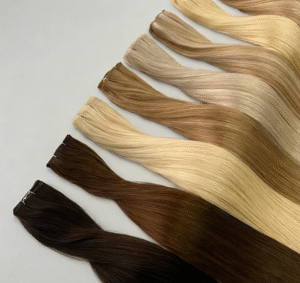
Hair extensions for volume give salons a practical way to add density while keeping the overall length close to the client’s existing hairstyle. The right choice depends on the client’s natural hair, the area that needs more fullness, and how much hair is needed to create the desired result. For salons, wholesalers, and private-label brands, understanding these differences also makes it easier to build a useful extension range.
What Are Hair Extensions for Volume?
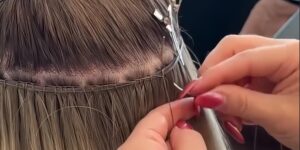
Hair extensions for volume are used mainly to increase fullness and density rather than add significant length. The extensions can be close to the client’s natural length. This works particularly well when the ends look thin or uneven. Instead of adding much longer hair, a stylist can use extensions at a similar length to make the existing hairstyle look fuller.
Volume can also be added around the sides, crown, or back when certain areas look less dense. Adding more hair does not always create a better result. Weight, length, attachment method, and placement all affect how natural the finished style looks and feels.
Which Hair Extensions for Volume Are Best for Adding Volume?
There is no single extension method that works best for every volume service. The choice usually comes down to how much coverage is needed and how precisely the hair needs to be placed.
Tape-In Hair Extensions for Wider Coverage

Tape-In extensions are a practical option when a client needs fullness across a wider area. Their flat attachment sits close to the natural hair, and the extensions can be selected at a similar length when extra volume is more important than length. They can work well through the sides, back, and lower sections of the hair. For salons, Tape-Ins are also convenient for clients who return regularly for maintenance and reapplication.
〈توصية بالمنتج: شريط لاصق في وصلات الشعر〉
Weft Hair Extensions for Overall Fullness
Weft extensions can add a larger amount of hair through fewer sections, making them useful when the goal is overall fullness. The thickness and flexibility of the weft should match the client’s natural hair. A thinner, more flexible weft can be easier to blend into finer hair, while clients with denser hair may need a more substantial option.
I Tip Hair Extensions for Volume

I Tip extensions are installed strand by strand using small micro rings or beads. They normally do not require heat or glue. Their main advantage for volume is placement. A stylist can add hair exactly where more density is needed instead of distributing the same amount across a larger section. This makes I Tip extensions particularly useful when a client has specific areas that look thin or sparse.
〈توصية بالمنتج: أنا تيب وصلات الشعر〉
Keratin Tip Hair Extensions for Volume and Length

Keratin Tip extensions can add both fullness and length while allowing the stylist to control placement strand by strand. They can be a good option when a client wants a fuller result but also wants to change the overall length of the hairstyle. The attachment and application method should be selected according to the client’s natural hair and the salon’s installation process.
〈توصية بالمنتج: وصلات الشعر من نوع K Tip〉
Clip-In Hair Extensions for Volume
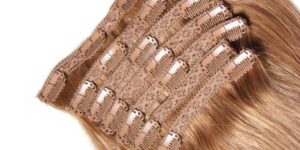
Clip-In extensions are mainly useful when volume is needed for a short period. They can be used for events, photoshoots, weddings, or clients who want to try a fuller look before choosing a semi-permanent method. They are also useful for salons that want to offer a simple temporary volume option alongside other extension services.
What Hair Extensions for Volume Are Best for Fine or Thin Hair?
Fine hair refers to the diameter of the individual strands, while thin hair usually refers to lower overall hair density. A client can have fine hair with good density, thin hair with thicker strands, or both. Either way, product selection needs more care. The aim is to create visible fullness without adding unnecessary weight or tension.
A stylist should first look at the client’s natural density, hair condition, desired result, and the specific area that needs more volume. If the main problem is thin ends, extensions close to the client’s natural length may be enough. There is no need to add several inches of length simply to make the ends look fuller.
If only certain areas need more density, a strand-by-strand method such as I Tip gives the stylist more control over placement. For broader coverage, Tape-Ins or a suitable lightweight weft may be more practical. Length also matters. Longer extensions usually need more hair to keep the ends looking full. When volume is the main goal, choosing a length closer to the client’s natural hair can help create fullness without adding unnecessary weight.
Salon Decision Guide: Which Method Should You Choose?
A simple way to choose volume hair extensions is to start with what the client wants to achieve and where the extra fullness is needed.
If the client wants… | Consider… | Main reason |
Fuller hair across a wider area | التثبيت بالشريط | Flat attachment and broad coverage |
More overall density | Weft | Adds more hair through fewer sections |
More volume in specific areas | نصيحة | Precise strand-by-strand placement |
Volume plus noticeable length | طرف الكيراتين | Adds length while allowing controlled placement |
Temporary volume | شعر مستعار قابل للتثبيت | Easy to remove after styling |
Fuller ends without much extra length | Similar-length extensions | Adds density without unnecessarily changing the length |
This is a starting point rather than a fixed rule. The client’s natural hair density, condition, desired fullness, and the stylist’s preferred application method should be considered together. For fine hair in particular, the lightest suitable option is not always the same for every client. Placement and the amount of hair used can be just as important as the extension type.
How Much Hair Is Needed for Volume?
Around 100g is a useful starting point for many volume applications, but it is not a fixed amount. A client with very fine hair or a smaller area that needs filling may need less. Someone with thicker hair or a stronger preference for fullness may need more. The extension method also affects how the hair is distributed. Tape-Ins and wefts cover larger areas differently from strand-by-strand methods such as I Tip or Keratin Tip extensions.
For salons and wholesale buyers, offering different package weights, such as 50g and 100g, gives stylists more flexibility when working with different clients and service requirements. The better question is not simply, “How many grams do I need?” It is, “How much hair does this client need to achieve the desired fullness?”
What Should You Look for When Buying Hair Extensions For Volume ?
For B2B buyers, a good-looking sample is only the beginning. Repeat-order consistency is often more important. Before placing a larger order, check:
- Hair texture and density
- Color consistency
- Shedding and tangling
- Performance after brushing and styling
- Available lengths and package weights
- Attachment construction
- Packaging and customization options
FAQ About Hair Extensions for Volume
What type of hair extensions add the most volume?
For overall fullness, Tape-In and weft extensions are often practical choices because they can add hair across wider areas. I Tip and Keratin Tip extensions are useful when more precise placement is needed.
Are hair extensions for volume good for thin hair?
They can be, but the method and amount of hair need to match the client’s natural density and condition. Lightweight options and careful placement can help create fullness without unnecessary weight.
Can hair extensions for volume make thin ends look thicker?
Yes. Using extensions close to the client’s natural length can add density to thin or sparse ends without significantly changing the overall hairstyle.
How much hair do I need hair extensions for volume?
Around 100g can be a useful starting point for many volume applications, but some clients need less or more depending on their natural hair density, desired fullness, and the extension method.
Are Tape-In extensions good for adding volume?
Yes. Tape-Ins are useful when fullness is needed across a wider area and the stylist wants a flat attachment that blends closely with the natural hair.
Are I Tip extensions good for thin hair?
They can be useful when volume is needed in specific areas. Because I Tips are installed strand by strand, the stylist has more control over where additional density is placed.
الأفكار النهائية
For salons and wholesale buyers, a practical volume extension range should offer reliable options for different client needs, from wider coverage and overall fullness to targeted volume and temporary styling. Consistent quality, flexible specifications, and reliable repeat orders are equally important when building a long-term salon or wholesale business.
Looking for hair extensions for volume for your salon or wholesale business? Get in touch with our team to discuss product options, specifications, and customization for your market.