English
 German
 Spanish
 Portuguese
 French
 Dutch
 Swedish
 Arabic

Choosing a hair extension supplier for a salon means looking beyond price. A reliable supplier should offer consistent hair quality, the extension methods your stylists use, practical MOQs, dependable colors and lengths, and reliable reordering. For salons, stock availability and repeat consistency matter because clients may return months later for the same shade or method. The right supplier should help you serve different clients without forcing you to carry more inventory than you need.

What Should a Salon Look for in a Hair Extension Supplier?
A salon should evaluate a hair extension supplier in six main areas: hair quality, product range, ordering flexibility, color consistency, restocking reliability, and after-sales support. Good hair needs to perform well in real salon use, while the supplier should also make it easy to order the methods, shades, and lengths your clients actually request. Flexible MOQs can reduce unnecessary inventory, and reliable reordering helps avoid delays when clients return for maintenance or replacement hair. Clear communication also matters, especially when you need help with specifications, color matching, or quality issues.
| What to Check | Why It Matters |
| Hair quality | Affects client results and repeat appointments |
| Product range | Supports different salon services |
| MOQ | Controls inventory investment |
| Color consistency | Makes repeat installations easier |
| Lead time | Helps salons schedule appointments |
| Reorder reliability | Prevents service interruptions |
| Support | Helps resolve product or order issues |
<Extended Reading: Wholesale Hair Extensions: A Complete B2B Buying Guide>
Choose a Hair Extension Supplier That Matches Your Salon Services
The right hair extension supplier should match the services your salon actually sells, rather than simply offering the largest catalog. A salon that focuses on tape-ins and wefts may have very different purchasing needs from one that mainly installs keratin bonds or nano rings. Start with the methods your stylists already use, then check whether the supplier can provide stable quality, suitable specifications, and dependable stock for those products.
Hair Extension Methods
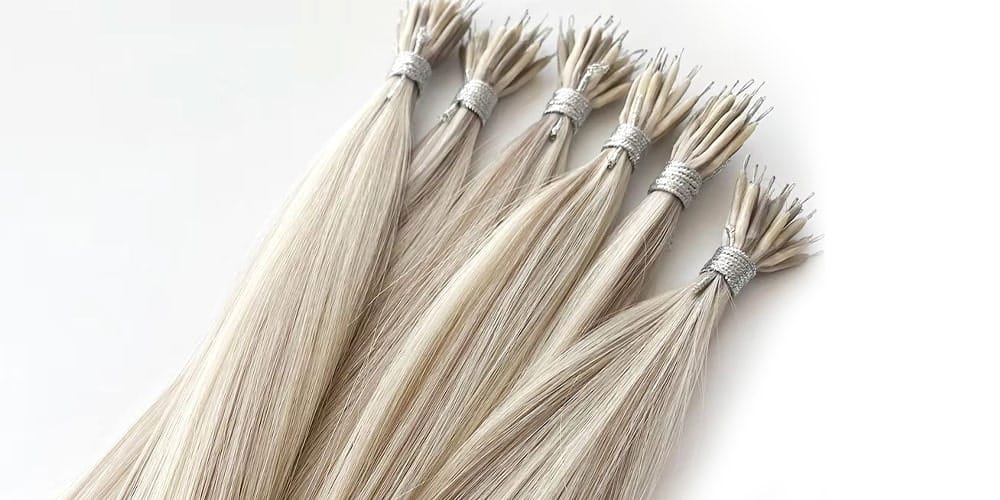
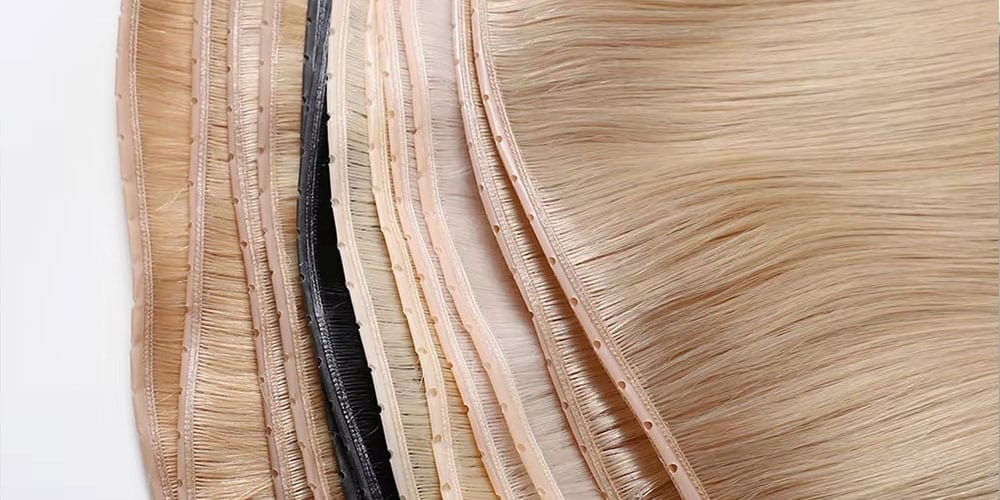
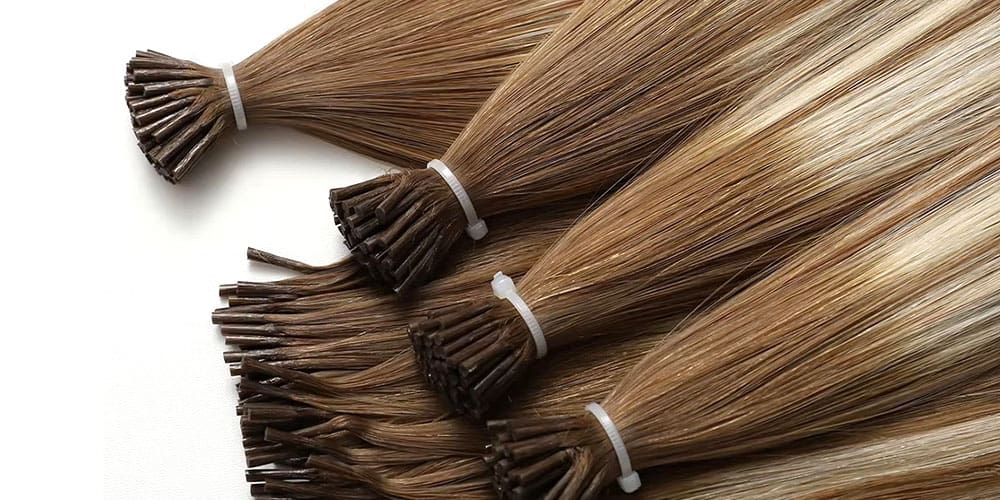
Common salon methods include Tape-In, Genius Weft, Hand-Tied Weft, Machine Weft, K-Tip, U-Tip, I-Tip, Nano Ring, Clip-In, and Halo extensions. A wide product range is useful only when the methods fit your salon services and client demand. Consistency matters more than having dozens of options you rarely order.
Colors, Lengths and Textures
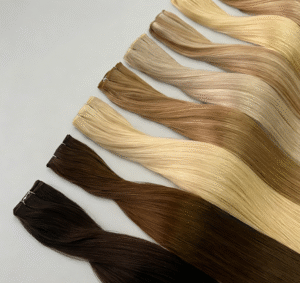
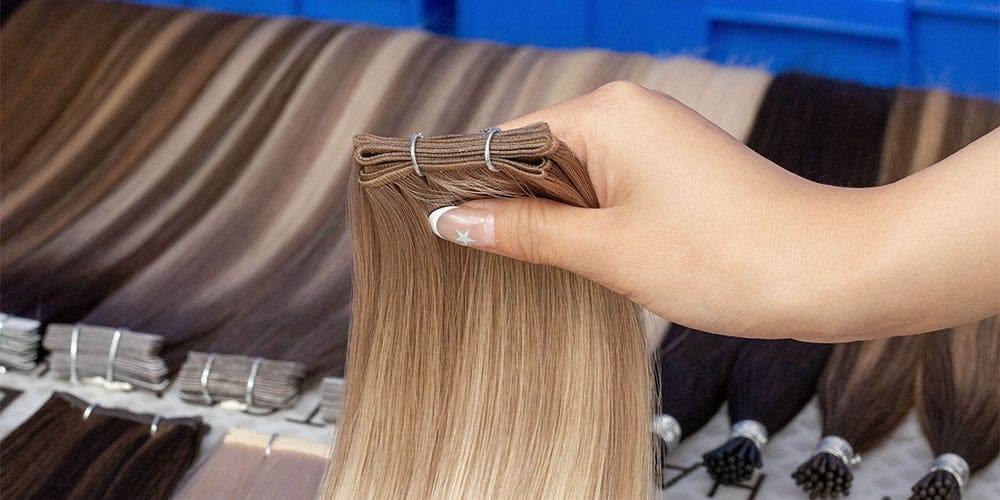
Check whether the supplier regularly carries the shades, lengths, and textures your clients request, including brunettes, blondes, black shades, rooted colors, balayage, highlights, and straight or textured hair. A smaller but consistently available color range can be more useful to a salon than a large color chart that changes between orders.
<Related Article:How to Choose the Reliable Hair Extension Manufacturer>
How Do You Evaluate Hair Extension Quality?
Hair quality should be judged by more than whether the product is labeled 100% human hair. Salons should look at fiber quality, cuticle alignment, processing, density, shedding, and how the hair performs after washing and styling.
Hair Fiber and Cuticle Alignment
100% human hair is the starting point, but not the full quality standard. Remy or cuticle-aligned hair can reduce friction and tangling, yet the final result still depends on processing and fiber consistency. See What Is Remy Hair? for a deeper explanation.
Processing and Color Treatment
Ask how the hair was colored or lightened, especially for #60, platinum, and balayage shades. Heavy bleaching or cosmetic coatings can affect long-term softness and strength.
Density and End Fullness
Check the actual grams, short-hair percentage, and how full the ends remain. Double-drawn hair usually gives a fuller appearance than heavily tapered hair.
Tangling and Shedding
Do not judge quality only by how silky the hair feels out of the package. Wash, brush, blow-dry, and heat-style the sample to see how it performs in real salon use.
<Hair Extension Recommendation: Butterfly Weft Hair Extensions >
Why Does Batch Consistency Matter for a Salon?
For salons, consistent repeat orders can be more important than receiving one excellent sample. Clients often return for move-ups, replacement hair, or extra volume, so the next order needs to match the original as closely as possible.
Changes in shade, texture, thickness, weight, or tape and weft construction can make blending harder and create an inconsistent client experience. Before choosing a hair extension supplier, ask how they control specifications between production batches and whether repeat orders can be matched to previous purchases.
Should You Order Hair Extension Samples First?
Yes. A salon should test hair extension samples before committing to a new supplier, especially when the hair will be used for professional installation. A sample should not be judged only by how soft or silky it feels straight from the package.
What to Test
Wash and condition the hair, then air-dry, blow-dry, brush, and heat-style it. Check for tangling, shedding, dryness, end quality, and any noticeable color change after washing. Testing under normal salon conditions gives a better idea of how the hair will perform on clients.
Test the Attachment System
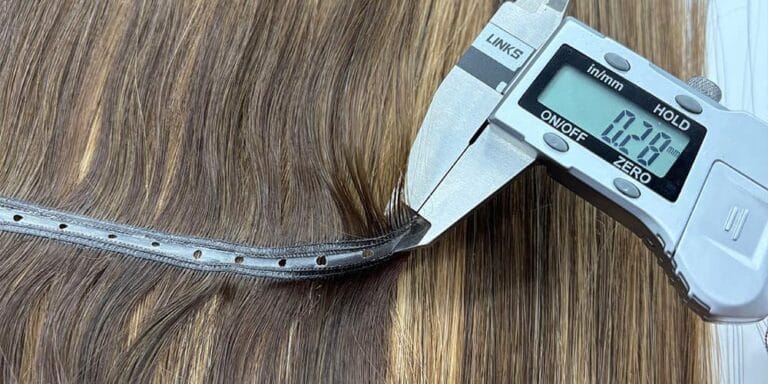
The attachment also needs testing. For tape-ins, check adhesive strength, residue, and panel construction. For wefts, look at seam thickness, flexibility, and shedding. For K-Tips, check bond strength and keratin consistency.
<Related Article:How to Order Hair Extension Samples from a Manufacturer>
Compare MOQ, Pricing and Ordering Flexibility
Salons should compare more than the unit price. MOQ, mixed-order options, and reorder requirements all affect how much inventory you need to carry.
Ask about the total MOQ as well as minimums by color, length, and extension method. Suppliers that allow mixed shades and lengths can make it easier to stock for different clients without overbuying.
| Supplier Policy | Why It Helps Salons |
| Flexible MOQ | Reduces inventory pressure |
| Mixed colors | Makes shade matching easier |
| Mixed lengths | Supports different appointments |
| Small reorders | Helps avoid dead stock |
| Sample orders | Allows testing before bulk purchase |
Price should also be compared against usable hair, not just pack cost. A cheaper pack may offer less value if the ends are thin, the weight is inconsistent, or the hair needs replacing sooner.
Check Color, Length and Stock Availability
A large color chart is useful only if the hair extension supplier can keep those shades available and reproduce them consistently. For salons, availability and repeatability are often more important than the total number of colors offered.
Check whether popular blondes, brunettes, black shades, rooted colors, balayage, and highlights are regularly stocked. Also ask about available lengths, custom color MOQs, and whether the supplier provides a color ring.
If a client books a 20-inch installation in a specific shade, you need confidence that the same color can be reordered later. Stock availability is part of supplier reliability, not simply inventory convenience.
Ask About Lead Times and Reordering
Lead time matters because salons often order around booked appointments rather than large warehouse inventory. Ask how long in-stock orders, production orders, custom colors, and private label products normally take, and which shipping methods are available.
Also check how quickly repeat orders can be processed. Reliable reordering helps a salon keep inventory lean without risking long client wait times. A hair extension supplier with predictable lead times makes it easier to plan appointments, manage cash flow, and avoid stocking more hair than necessary.
Evaluate Communication and After-Sales Support
A good hair extension supplier should be able to clearly explain product specifications, hair type, processing, colors, weight, attachment method, MOQ, and lead time before you order. It is also important to understand what happens if there is a problem. Ask who handles quality claims, how quickly issues are reviewed, what information is required, and whether the hair extension supplier keeps records of previous order specifications for repeat purchases.
Good communication does not replace product quality, but poor communication makes quality problems much harder to solve. For a salon, reliable support is especially important when an issue could affect an upcoming client appointment.
<Hair Extension Recommendation: Keratin Tips Hair Extensions>
Manufacturer vs Distributor: Which Is Better for a Salon?
Neither option is automatically better. The right choice depends on your order volume, need for customization, and how quickly you need stock.
| Factor | Manufacturer | Distributor |
| MOQ | Often larger | Often smaller |
| Customization | Strong | Limited |
| Private Label | Usually available | Sometimes |
| Ready Stock | Depends | Often stronger locally |
| Product Development | Strong | Limited |
| Direct Pricing | More likely | Includes distribution margin |
| Fast Local Delivery | Depends | Often stronger |
A smaller salon may prefer a distributor for lower MOQs, domestic stock, and faster delivery. A growing or multi-location salon may benefit more from working with a manufacturer that can provide custom colors, weights, packaging, private label options, and stable product specifications.
<Related Article:Hair Extensions Manufacturer vs Trading Company: Which Hair Supplier Is Better for Your Business?>
For a deeper comparison, see Hair Extension Manufacturer vs Trading Company.
Should Your Salon Consider Private Label Hair Extensions?
Private label can make sense once your salon has a steady client base and understands which products sell consistently. Instead of only installing extensions, you can offer salon-branded hair, packaging, color labels, care cards, brushes, or aftercare products. However, there is no need to start with a large product range. A safer approach is to test the hair first, confirm client demand, launch a small number of proven colors and lengths, and expand gradually.
If building a salon-branded range is part of your growth plan, see OEM and Private Label Hair Extensions: A Buyer’s Guide.
FAQs About Hair Extension Suppliers for Salons
Q: What should I look for in a hair extension supplier for my salon?
A: Look for consistent hair quality, suitable extension methods, flexible MOQs, reliable colors, stable lead times, and clear after-sales support.
Q: Should a salon buy hair extensions directly from a manufacturer?
A: Not always. Manufacturers are better for customization and private label, while local distributors may offer lower MOQs and faster delivery.
Q: How can a salon test hair extension quality?
A: Wash, dry, brush, and heat-style the sample. Check for tangling, shedding, dryness, end fullness, color change, and attachment performance.
Q: Should I order samples before buying wholesale hair extensions?
A: Yes. Samples help you test the hair and attachment system before committing to a larger salon order.
Q: What hair extension methods should a salon stock?
A: Stock the methods your stylists use most and your clients regularly request, such as Tape-Ins, Wefts, K-Tips, I-Tips, or Nano Rings.