English
  German
  Spanish
  Portuguese
  French
  Dutch
Dutch  Swedish
  Arabic
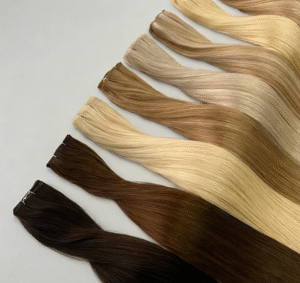
Hair extension quality should be evaluated by more than how soft the hair feels when you first open the package. Before placing a wholesale order, buyers should look at the hair fiber, cuticle alignment, processing, density, shedding, tangling, construction, and how the hair performs after washing and styling. A good sample should not only look attractive at first—it should also hold up under real salon use and match the quality you expect to receive again in future bulk orders.
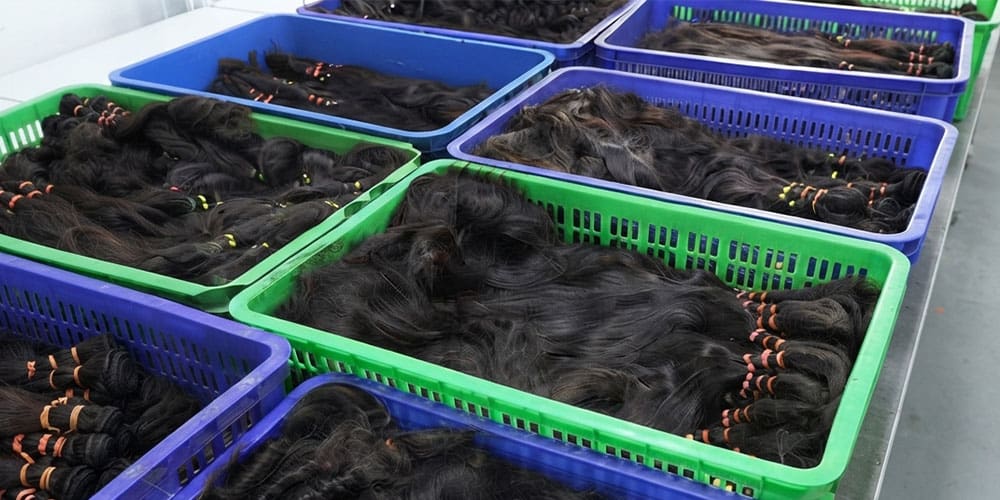
What Defines Good Hair Extension Quality?
Good hair extension quality comes from several factors working together, not from one label such as “100% human hair” or “Remy.” Buyers should look at the condition of the hair fiber, cuticle alignment, processing, density, end fullness, shedding, tangling, and the quality of the finished attachment.
The hair should remain manageable after washing, brushing, and normal heat styling, while the color, texture, and weight should stay reasonably consistent from one batch to the next.
Start With the Hair Fiber and Cuticle Alignment
The first step is to confirm what type of hair you are actually buying. 100% human hair is the basic starting point, but it does not automatically mean the extensions are high quality. Hair fiber condition, cuticle alignment, processing, and consistency still matter.
Cuticle-aligned or Remy hair generally has the strands running in the same root-to-tip direction, which helps reduce friction between fibers. However, Remy is not a complete quality grade. Hair can be cuticle-aligned and still perform poorly if it has been heavily bleached, chemically processed, or coated to improve the initial feel.
< Related Article: How to Choose a Reliable Hair Extension Manufacturer>
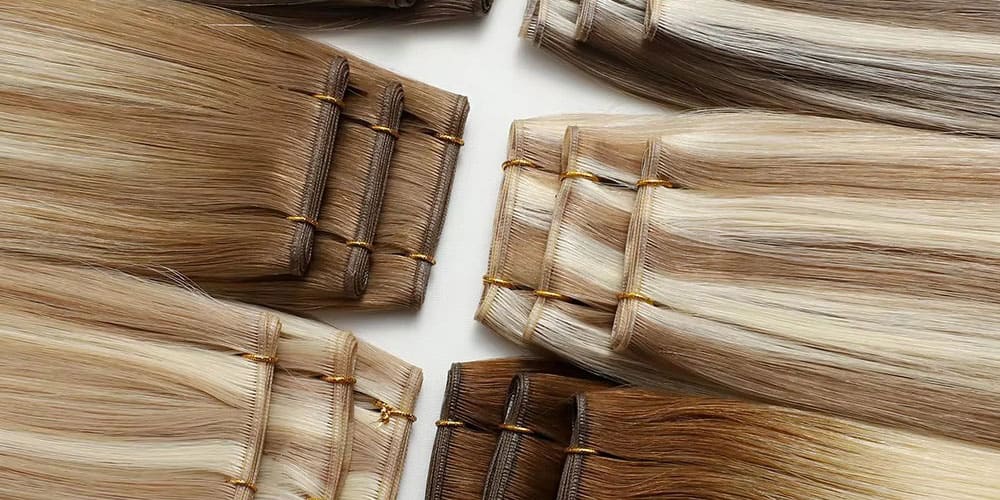
< Product Recommendation: Genius Weft Hair Extensions >
Check Processing and Color Treatment
Processing can have a major effect on how hair performs after a few washes. Ask the supplier how the hair was colored, lightened, textured, or chemically treated, especially when buying very light shades such as #60, platinum blonde, ash tones, or balayage colors.
Heavy bleaching can weaken the fiber and make the hair more prone to dryness, breakage, and tangling. Some hair may also feel unusually smooth when new because of silicone or other surface treatments. That does not always reflect how the hair will behave after repeated washing. Processing history often explains why two products sold under the same “Remy hair” label perform very differently over time.
Evaluate Density, Weight and End Fullness
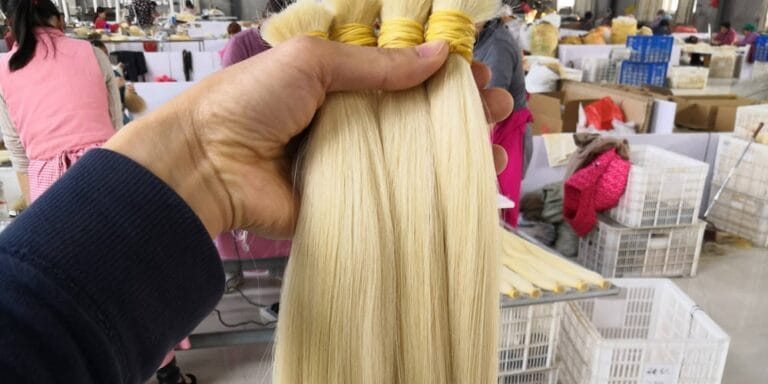
Do not judge a bundle only by the weight printed on the package. Two 100-gram products can look very different depending on how much short hair is mixed in and how the density is distributed from top to ends.
Check the actual weight, the amount of short hair, and how full the ends remain. Double-drawn hair usually has a more even length distribution and fuller ends, while heavily tapered hair may require more packs to create the same finished look.

Test the Hair After Washing
A wash test is one of the most useful ways to evaluate hair extension quality before a wholesale order. Hair that looks smooth and glossy out of the package may behave very differently once finishing products or surface coatings are removed.
Wash the sample with a mild shampoo, condition it normally, and rinse thoroughly. Let part of the hair air-dry and blow-dry another section. Then brush and heat-style it as you would during normal salon use.
Pay attention to tangling, matting, dryness, frizz, texture changes, color bleeding, and any major loss of softness. The goal is not to make the sample look perfect. It is to see whether the hair remains manageable under realistic conditions.
< Related Article: How to Choose a Hair Extension Supplier for a Salon >
Check Tangling, Shedding and Breakage
Some tangling and shedding can happen with any hair extension product, so the goal is not to expect zero hair loss. What matters is whether the amount remains reasonable and consistent during washing, brushing, and styling.
Check whether the hair becomes difficult to brush when wet or dry, whether the ends knot easily, and whether excessive loose hair appears after repeated handling. For light-colored hair, also look for short broken fibers or snapping under gentle tension.
The most useful test is repeat performance. Hair that remains manageable through several wash and styling cycles is generally more informative than hair that only feels soft on the first day.
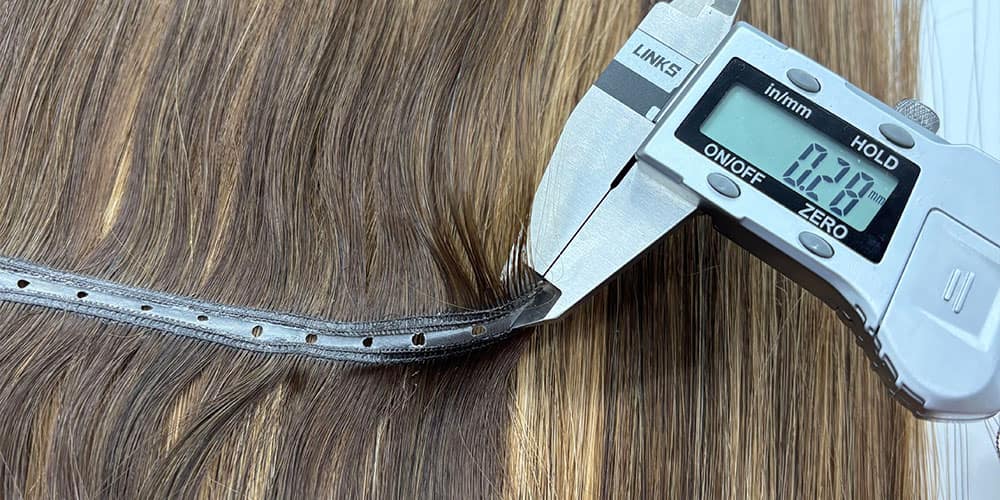
< Product Recommendation: Butterfly Weft Hair Extensions >
Inspect the Extension Construction
Hair fiber quality is only one part of the finished product. The attachment system also needs to be checked because good hair can still perform poorly if the construction is inconsistent.
For Tape-In extensions, inspect the adhesive strength, panel thickness, edge bonding, and whether excessive residue appears during removal. For wefts, check seam strength, track thickness, flexibility, shedding, and whether the weft can handle normal cutting or sewing. For K-Tip, U-Tip, and I-Tip extensions, look at bond size, keratin consistency, and attachment strength.
The construction should be stable enough for professional installation while still matching the thickness and flexibility your salon or customers expect.
<Related Article: How to Order Hair Extension Samples from a Manufacturer >
Compare Samples for Batch Consistency
One good sample does not prove that future bulk orders will be the same. For wholesale buyers, consistency between orders is often more valuable than receiving one unusually good sample.
Compare more than one color or length where possible, and check whether weight, texture, end fullness, color tone, and construction remain similar. Once you place an initial order, compare the bulk product with the approved sample rather than treating them as separate purchases.
Repeat orders are especially important. If the color, density, or construction changes noticeably every time you reorder, it becomes difficult to maintain stable product quality for salons, distributors, or private label customers.
A Simple Hair Extension Quality Testing Checklist
A structured checklist makes it easier to compare samples from different suppliers using the same standards.
| Test | What to Check |
| Visual inspection | Color, texture, short hairs, obvious damage |
| Weight check | Actual grams compared with stated weight |
| End density | Fullness from top to ends |
| Wash test | Dryness, tangling, frizz, coating loss |
| Brush test | Shedding and resistance |
| Heat test | Styling response and fiber strength |
| Color test | Fading, bleeding, or tone changes |
| Construction test | Tape, weft, bond, or clip stability |
| Batch comparison | Color, weight, texture, and specification consistency |
No single test proves hair extension quality. The most reliable decision comes from combining fiber inspection, wash performance, construction testing, and batch consistency.
FAQs About Hair Extension Quality
1. How can you tell if hair extensions are good quality?
Good hair extensions should remain manageable after washing and styling, with reasonable shedding, consistent density, stable color, and strong construction.
2. Is 100% human hair always high quality?
No. Human hair can still vary widely in cuticle condition, processing, density, strength, and overall consistency.
3. Does Remy hair mean high-quality hair?
Not necessarily. Remy describes cuticle direction, but processing, density, fiber strength, and batch consistency also affect quality.
4. Should I wash hair extension samples before ordering wholesale?
Yes. Washing helps reveal tangling, dryness, shedding, color changes, and how the hair performs once surface treatments are reduced.
5. How do you test hair extension shedding?
Wash and brush the sample several times, then compare the amount of loose hair before and after. Also inspect the attachment area for shedding.
6. Is double-drawn hair always better?
Not always. Double-drawn hair usually gives fuller ends, but fiber quality, processing, actual weight, and consistency still need to be checked.
Test the Hair, Not Just the Label
Hair extension quality cannot be judged by one label, one touch test, or one good-looking sample. Before a wholesale purchase, evaluate the fiber, processing, density, wash performance, shedding, construction, and consistency between samples. A structured testing process gives buyers a clearer picture of how the hair is likely to perform in real use and whether the supplier can reproduce that quality in future bulk orders.