English
 German
 Spanish
 Portuguese
 French
 Dutch
 Swedish
 Arabic

Choosing tape in hair extensions for salon involves more than comparing colors and lengths. Salons should consider hair quality, tape construction, panel size, weight, adhesive performance, color availability, and reorder consistency. The right product should be easy to install, look natural on different clients, and maintain consistent quality across repeat orders. Reliable supplier support is also important when salons need to replenish popular shades or resolve product issues.
What Should Salons Look for in Tape-In Hair Extensions?
A salon should evaluate tape-in extensions based on their performance in real salon use, not just how they look in the package. Important factors include hair quality, tape construction, panel weight, adhesive, available colors and lengths, and reorder availability.
The best tape-in extensions are not necessarily the most expensive or the thinnest. They should deliver consistent results across different clients and maintain the same color, weight, construction, and adhesive quality when reordered. This is particularly important for clients returning for maintenance or additional hair.
Before choosing a product, salons should also understand How to Compare Wholesale Hair Extension Suppliers
Choose the Right Tape In Type for Your Clients
Different tape-in constructions suit different clients and salon services. Rather than stocking only one type, consider building a small product range based on your clients’ hair types and the services your salon offers.
Regular Tape in hair extensions for slaon
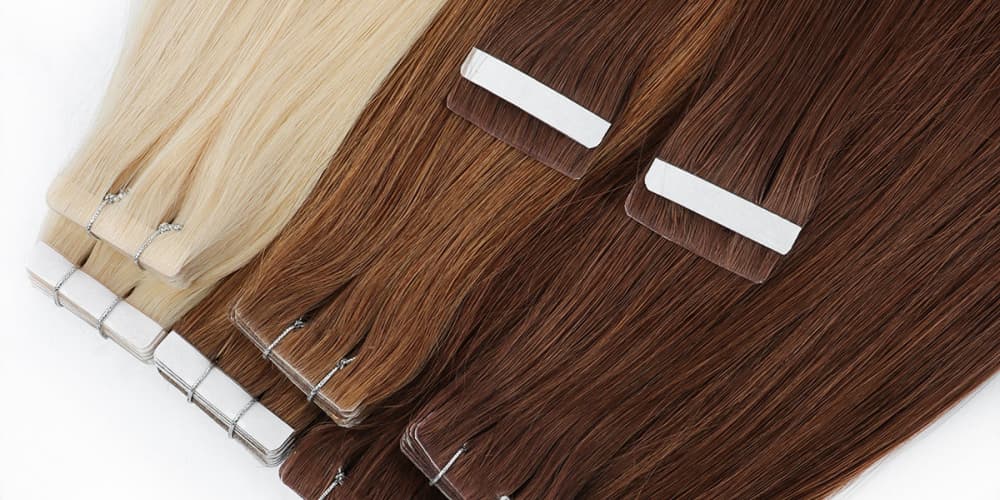
Regular tape-ins are a practical choice for everyday salon services. They work well for clients with enough natural hair to cover the tabs and are available in various colors, lengths, and weights. They are also a useful option for building your salon’s core inventory.
Invisible or Seamless Tape In Hair Extensions For Salon
Invisible or seamless tape-ins feature a thinner or more discreet base, making them easier to conceal in finer areas of the head. However, the name alone does not guarantee better performance. Check the base thickness, panel width, weight, and construction before choosing.
Injected Tape In Hair Extensions for Salon
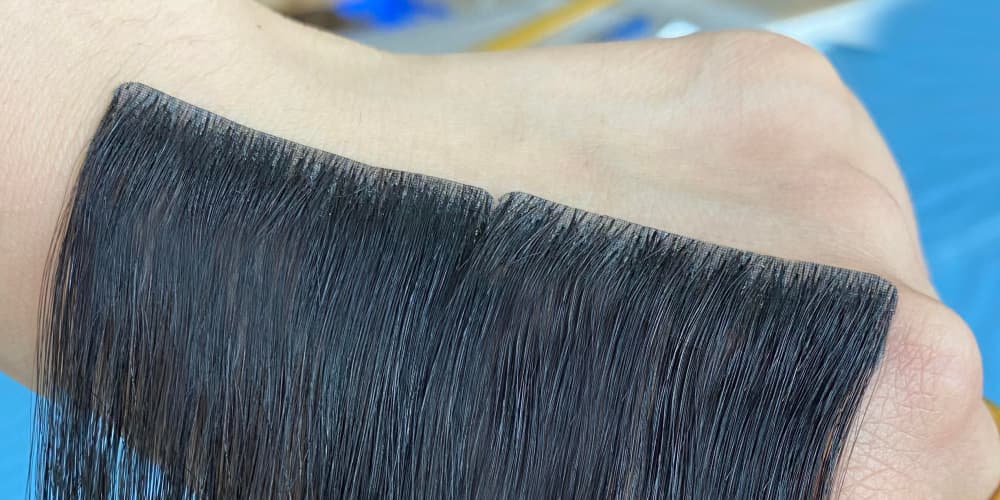
Injected tape-ins use a polyurethane base into which the hair is injected, creating a scalp-like appearance. They are often suitable for premium salon services where a natural-looking attachment is important. Check the base flexibility, weight, finish, and condition after removal and reapplication.
Mini Tape in Hair Extensions for salon
Mini tape-ins have smaller tabs that give stylists more flexibility around the temples, sides, and other smaller sections. However, smaller panels are not automatically lighter. Their weight should still match the client’s natural hair density.
Related Article: Invisible Tape In Hair Extensions vs Regular Tape-In Hair Extensions
Recommend Products: Tape in Hair Extensions
Evaluate the Hair Quality, Not Just the Label
Labels such as “100% human hair” and “Remy” are useful starting points, but they do not tell you everything about product quality. Check cuticle condition, processing, end fullness, shedding, tangling, and color stability. Light shades such as #60, platinum, and balayage deserve particular attention because intensive processing can affect hair strength and softness.
Remy hair can still vary depending on processing and density. For salon use, the hair should remain manageable after washing and perform consistently across different orders. For more detailed testing advice, see How to Evaluate Hair Extension Quality Before Wholesale Purchase.
Compare Panel Size, Piece Count and Weight
Do not compare tape-ins by total pack weight alone. Check the number of pieces, grams per panel, tape width, and panel height. Two 100g packs may contain different numbers of tabs, with one using more lightweight pieces and the other fewer, heavier panels.
These differences affect installation, blending, and how easily stylists can customize an application for different hair densities. Grams per panel are just as important as total pack weight because they help stylists distribute weight more appropriately and achieve a natural result.
Check Tape and Adhesive Performance
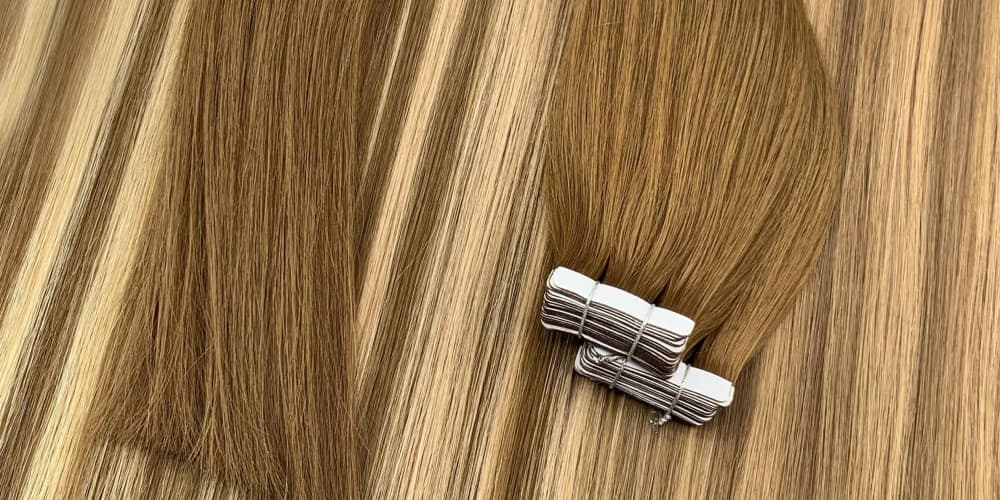
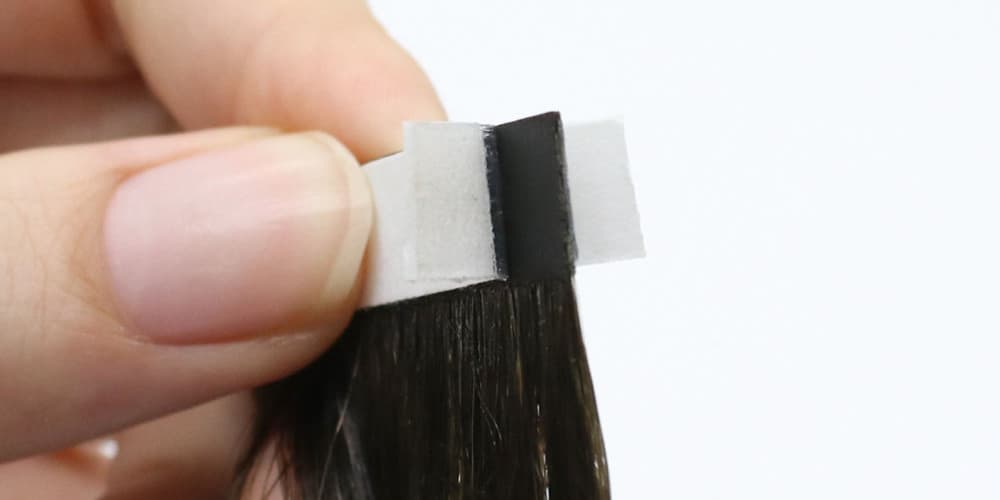
Adhesive quality is essential for professional tape-in services. The tape should hold securely during wear but also allow clean removal and easy replacement during maintenance. When testing a new product, check for slipping, edge lifting, sticky residue, and how easily the old adhesive can be removed from the PU base. Also confirm that compatible replacement tape and adhesive remover are available.
The goal is not simply the strongest adhesive. Reliable hold, clean removal, and consistent reapplication are equally important. Excessive residue or damage to the base can make salon maintenance more difficult.
Plan Colors and Lengths Around Client Demand
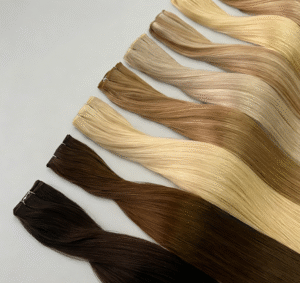
Salons do not need to stock every available color and length. It is usually more practical to build a core range around the shades clients request most often, such as brunettes, blondes, black, rooted colors, and balayage. Less common shades can be ordered when needed.
Apply the same approach to lengths. Choose a few popular options based on local demand rather than carrying every available size. A smaller color range with reliable availability is often more useful than a large chart that cannot be consistently replenished.
Test Samples Before Adding a New Tape-In Line
Before introducing a new tape-in product or placing a bulk order, test samples under normal salon conditions. Wash, blow-dry, and heat-style the hair, then check the adhesive during installation, wear, removal, and reapplication. Look for tangling, shedding, color changes, and residue on the base.
A tape-in sample should be tested as a salon service, not simply inspected in its packaging. Whenever possible, let an experienced stylist evaluate the product. For more guidance, see How to Order Hair Extension Samples from a Manufacturer.
Check Reorder Consistency and Stock Availability
A good first order does not guarantee reliable future supply. Ask whether the supplier can reproduce the same color, grams per panel, panel size, base material, adhesive, and processing standard for repeat orders.
Also check which colors and lengths are regularly stocked and how long custom or out-of-stock products take to produce. A supplier should be judged not only by the first delivery but by its ability to maintain consistent specifications over time. This matters when clients return for maintenance or need additional hair that matches their original installation.
Compare MOQ, Pricing and Customization
Price is important, but salons should also compare MOQ, minimum quantities per color and length, mixed-order flexibility, sample availability, and reorder requirements. Ask about additional charges for custom colors, weights, packaging, and labels.
For smaller salons, flexible ordering can be more valuable than the lowest unit price because it reduces excess inventory. If you plan to sell branded extensions, check whether the manufacturer offers custom packaging, labels, color stickers, care cards, and logo printing. Test product quality and customer demand before investing in a large private label range.
Tape In Hair Extensions for Salon: Quick Checklist
| What to Check | What a Salon Should Confirm |
| Hair | Fiber, processing, end fullness, wash performance |
| Tape type | Regular, invisible, injected, or mini |
| Panel | Width, weight per piece, construction |
| Adhesive | Hold, residue, removal, replacement tape |
| Colors | Popular shades and reorder consistency |
| Lengths | Client demand and stock availability |
| Samples | Test installation and maintenance |
| MOQ | Flexible mixed orders |
| Reordering | Consistent product specifications |
| Support | Claims, stock updates, technical assistance |
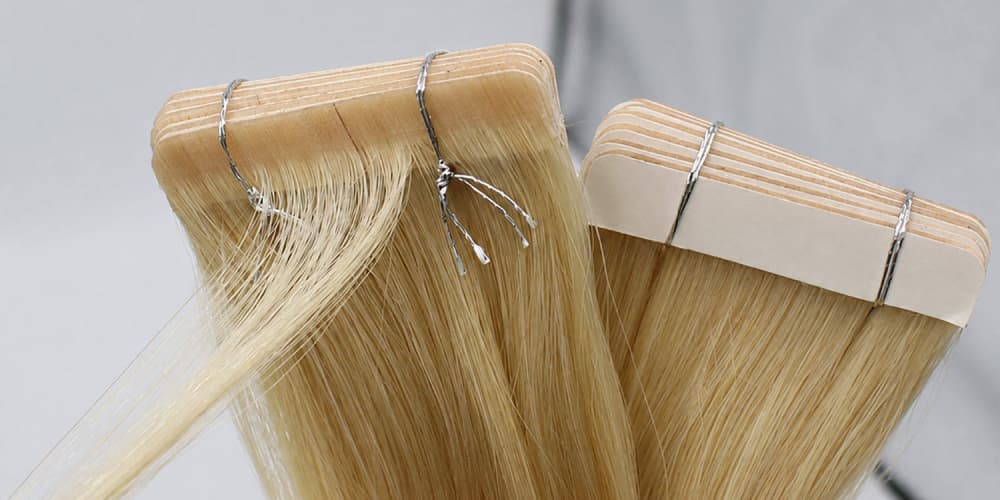
A simple checklist makes it easier to compare products from different suppliers using the same standards.
FAQs About Tape In Hair Extensions for Salon
1. What tape-in hair extensions are most suitable for salons?
The best choice depends on your clients’ hair types, service positioning, and budget. Most salons benefit from offering a small range of suitable products rather than relying on one type.
2. Should salons stock regular or invisible tape-ins?
Regular tape-ins are useful for everyday services, while invisible or seamless versions are worth stocking for clients who need more discreet attachments.
3. How much tape-in hair should a salon keep in stock?
Stock levels should reflect appointment volume, popular shades, common lengths, and how quickly your supplier can replenish products.
4. Should salons test tape-in samples before bulk purchasing?
Yes. Test hair quality, adhesive performance, washing, styling, removal, and reapplication before committing to a larger order.
5. What should salons check in tape-in adhesive?
Check holding strength, slipping, edge lifting, residue, removal, replacement tape compatibility, and consistency between batches.
6. Are Remy tape-in extensions always salon quality?
No. Remy describes cuticle alignment, but processing, density, end fullness, construction, and batch consistency also affect quality.
7. Can salons private label tape-in hair extensions?
Yes. Many manufacturers offer custom packaging, labels, colors, and branding. It is best to test the product and confirm customer demand before launching a private label range.
Choose a Tape-In System You Can Reorder With Confidence
The best tape-in hair extensions for salons are those that suit your clients, perform consistently during installation and maintenance, and remain available with the same specifications. Start with the tape types, colors, lengths, and weights your salon uses most often. Test samples under real salon conditions before expanding your product range.